

Apple’s M5 Ultra Mac Studio Sets New Standard for Local AI Performance

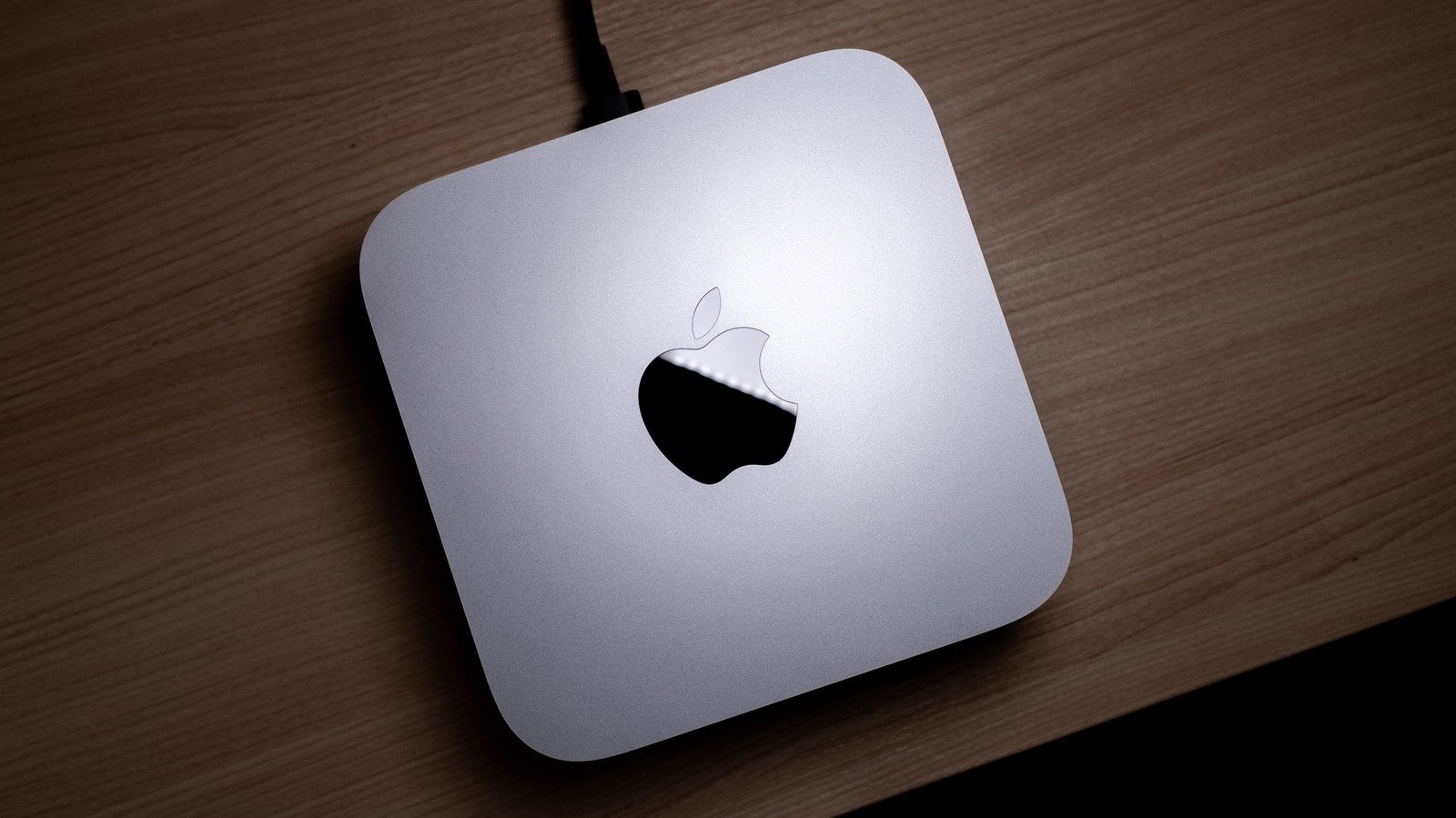
Apple’s latest Mac Studio, powered by the M5 Ultra chip, is reshaping expectations for local artificial intelligence (AI) workloads on desktop computers. Released on 22 September 2026, this model targets developers and professionals seeking to run large language models (LLMs) and AI agents directly on their machines without relying on cloud services.
The M5 Ultra Mac Studio features a 36-core CPU, an 80-core GPU, and a 32-core Neural Engine, paired with up to 256GB of unified memory at launch, with a 512GB variant expected in late October. Apple claims the M5 Ultra delivers up to 4.3 times the peak AI compute performance of its predecessor, the M3 Ultra, mainly due to its unprecedented 1.2TB/s memory bandwidth and a new quad-die design that combines two dual-die M5 Max chips via a high-speed UltraFusion interconnect.
Independent testing by Federico Viticci of MacStories, who reviewed a 256GB M5 Ultra unit, demonstrates significant real-world gains. In local AI benchmarks using models such as Qwen3.8-Flash-Next and GLM-5.3-Flash within the MLX ecosystem, the M5 Ultra achieved about 70% faster token generation and approximately 150% faster prompt processing compared to the M3 Ultra. For example, one test showed the M5 Ultra generating 108 tokens per second versus 70 tokens per second on the M3 Ultra for short prompts. Even at extended contexts—up to 256,000 tokens—the M5 Ultra maintained superior throughput, highlighting its suitability for demanding AI workflows.
While the M5 Ultra’s local AI capabilities impress, MacStories’ comparison with a desktop PC equipped with an Nvidia RTX 5090 GPU showed the latter still leads in raw token-generation speed for certain models. Nonetheless, the Mac Studio’s compact form factor, quiet operation, and integration with macOS 27 Golden Gate make it a compelling option for users prioritising local inference and data privacy.
Tom’s Hardware corroborated these findings, reporting that the M5 Ultra outperforms Nvidia’s DGX Spark system and the prior M4 Max chip by wide margins in local AI benchmarks. The Mac Studio’s extensive port selection—including Thunderbolt 5, USB-A, HDMI 2.1, and 10Gb Ethernet—and support for clustering multiple units over Thunderbolt 5 with RDMA networking allow scaling AI workloads across up to four systems, tripling inference performance for enterprise use cases.
Apple’s official specifications confirm the M5 Ultra Mac Studio’s high-end positioning, with prices starting at $5,499 in the US for the 256GB model. The 512GB memory configuration, which could further enhance performance for large AI models, will be available later in October. While the M5 Ultra is arguably overkill for most users, it represents a leap forward for local AI development, enabling sophisticated AI agents to run efficiently without cloud dependency.
Overall, the M5 Ultra Mac Studio establishes a new benchmark for desktop AI performance, combining raw power, memory capacity, and innovative architecture designed specifically to meet the rising demands of local AI inference and software development.