

U.S. Senators Question NBA’s Partnership with Rwanda Over Human Rights Concerns

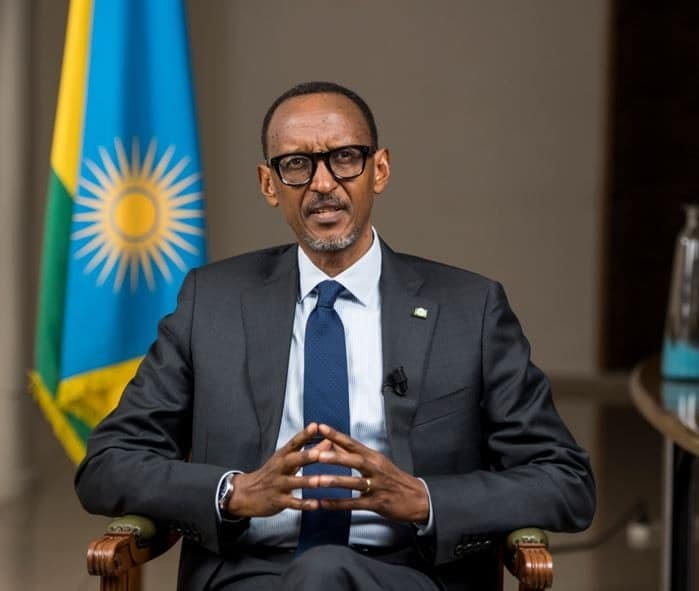
In August 2024, two U.S. senators, Marsha Blackburn (R-Tenn.) and Jeff Merkley (D-Ore.), formally challenged the National Basketball Association (NBA) regarding its close relationship with Rwanda and its president, Paul Kagame. In a letter addressed to NBA Commissioner Adam Silver, the senators raised concerns about the league’s ties to the Rwandan government, citing serious allegations of human rights abuses and calling on the NBA to clarify how it manages these issues within its business dealings.
The NBA’s partnership with Rwanda is largely centred on the Basketball Africa League (BAL), a professional league co-founded by the NBA and the International Basketball Federation (FIBA). Rwanda has been a key host for BAL games, including playoffs and finals held at Kigali’s BK Arena, a state-of-the-art $104 million facility. The Rwandan government has also leveraged its tourism promotion brand, Visit Rwanda, to sponsor NBA teams such as the Los Angeles Clippers, further embedding itself within the league’s global footprint.
However, Kagame’s government has long been criticised by international human rights organisations and the U.S. State Department for a range of abuses. These include the suppression of political opposition, censorship, and military involvement in ongoing conflicts in the eastern Democratic Republic of Congo (DRC). In March 2026, the U.S. Treasury Department imposed sanctions on the Rwanda Defence Force (RDF) and several senior officials, accusing them of supporting, training, and fighting alongside the M23 armed group in eastern DRC.
These sanctions had immediate implications for the BAL. APR, a prominent Rwandan basketball club owned and funded by the RDF, withdrew from the 2026 BAL season shortly after the sanctions were announced. The league subsequently replaced APR with the RSSB Tigers, a team owned by Rwanda’s Social Security Board. This move highlighted the NBA’s need to navigate complex compliance issues arising from U.S. foreign policy while maintaining its operations in Rwanda.
Responding to the senators’ letter, NBA Deputy Commissioner Mark Tatum emphasised that the league follows the guidance of the U.S. government regarding where it is appropriate to conduct business. He stated that if American policies toward Rwanda or other BAL markets were to change, the NBA would adjust its actions accordingly. Tatum also pointed to the league’s social impact initiatives in Rwanda, including programmes supporting girls’ education and raising awareness about gender-based violence, as part of the NBA’s broader commitment to positive community engagement.
Despite the scrutiny, the relationship between the NBA and Rwanda remains active. In February 2026, President Kagame met with NBA Commissioner Adam Silver and Deputy Commissioner Mark Tatum during the NBA All-Star weekend. Their discussions focused on basketball development and the continuation of the NBA’s partnership with Rwanda and the wider African continent. This meeting underscored Rwanda’s ongoing role as a hub for basketball growth in Africa.
The senators’ letter criticised the NBA for its association with a government accused of jailing, disappearing, or killing political opponents, urging the league to use its influence to promote governance reforms and respect for the rule of law. They highlighted the contrast between the NBA’s image as a champion of social justice and its business dealings with regimes accused of serious human rights violations.
For now, the NBA continues to maintain its partnership with Rwanda, balancing its business interests with compliance to U.S. government directives and the evolving political landscape. The future of this relationship will likely depend on developments in U.S. foreign policy and ongoing debates about the role of sports organisations in addressing human rights concerns.