

Inside Hisense Atlantis

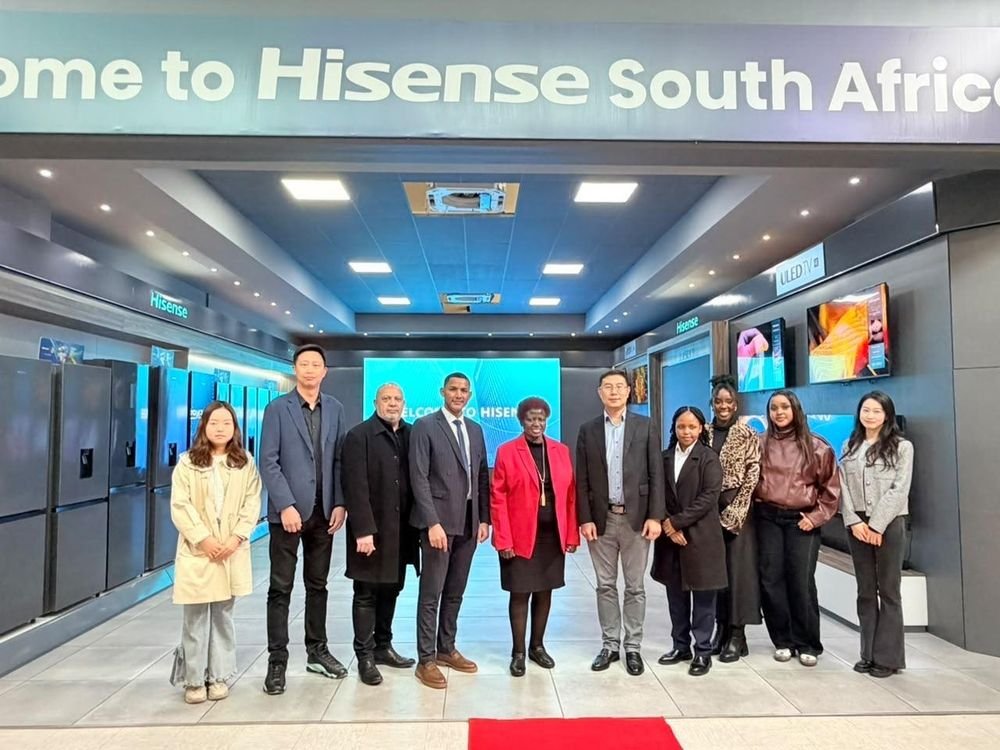
Inside Hisense Atlantis. News BRICSInside Hisense AtlantisDr Iqbal Survé and Sesona Mdlokovana|Published 1 hour agoAsk AI 7minSekunjalo Chairperson Zoliswa Kota and others meet the Hisense South Africa team at the Hisense South Africa Manufacturing factory in Atlantis, Cape Town, South AfricaImage: InternalFrom a closed-down factory to a Special Economic Zone anchorHisense's presence in South Africa goes back to 1996, when the Chinese electronics group first entered the local market.
What happened
A green economy anchorAtlantis was originally earmarked by the provincial government as a hub for the green economy, and Hisense's presence sits inside that broader environmental ambition. Atlantis, a town roughly 50 kilometres north of Cape Town saw the collapse of its industry in 2010. Its unemployment rate surpassed 50%and its name became shorthand for gang activity and the local drug trade. Walking through the Hisense factory floor, none of that history is visible. What is visible is a working plant: television lines humming, refrigerator shells moving down conveyor belts, and rows of employees, young and old, men and women doing precise, repetitive, skilled work. It is easy to forget, standing in that noise, that this facility is also a case study in how a single industrial investment can reshape a town's economic fortunes.
In March 2013, Hisense and the China-Africa Development Fund signed an agreement to build what became the Atlantis Industrial Park , a R350 million facility built, notably, on the site of an old appliance factory that had shut its doors in 2008, leaving hundreds jobless. Charmain Julies, who lost her job when the old Atlantis factory closed in 2008 and spent five years unemployed afterwards, was among the local hires when Hisense reopened the site, a detail she has spoken about as one of the harder chapters of her life finally closing.
Tour of Hisense Manufacturing factory, Cape Town, South AfricaImage: InternalLearnerships, building the next decade of workersIn September 2025, Hisense formalised that generational pipeline with a paid, SETA-accredited learnership programme offering 100 young people from Atlantis a year-long placement combining hands-on production experience with structured career development. Why it matters for South Africa's industrial policyHisense marked 30 years in the South African market in 2026, and its Atlantis story has become something of a reference case in conversations about reindustrialising South Africa's smaller towns.
Written by:*Dr Iqbal SurvéPast chairman of the BRICS Business Council and co-chairman of the BRICS Media Forum and the BRNN*Sesona MdlokovanaAssociate at BRICS+ Consulting GroupAfrica Specialist**The views expressed do not necessarily reflect the views of IOL. ** MORE ARTICLES ON OUR WEBSITE https://bricscg. com/ ** Follow @brics_daily on Twitter for daily BRICS+ updates and instagram @brics_dailyAsk AIRelated Topics:hisenseatlantisfactoryemvironmentFriday, September 18, 2026NewsCrime and CourtsSouth AfricaAfricaWorldBRICSEducationEnergyEnvironmentFeel GoodGovernment at WorkOpinionPoliticsOpinionOpinionNewsPoliticsEntertainmentLifestyleTechSportBusinessJobsEconomyPropertyWindow on ChinaHybrid WorkingEntertainmentCelebrity NewsStreamingMoviesMusicBooksWhats OnJoburgDurbanCape TownPretoriaOpinionLifestyleHealthBeautyFashionFoodRelationshipsParentingCompetitionsOpinionTravelLocalInternationalTechSoftware and InternetEsportsOpinionSportSoccerPSLRugbyCricketMMABettingOpinionHorse RacingMotoringReviewsLaunchesIndustry NewsMotorsport
The wider picture
Some of those same workers would later be re-employed once Hisense arrived. Atlantis had been earmarked as an industrial hub since the apartheid era, but by the 2010s it needed a new anchor tenant to justify the designation. The Atlantis Industrial Area was formally gazetted as a national Special Economic Zone in June 2018, a status that comes with tax incentives, streamlined customs procedures and infrastructure support designed to attract further manufacturers into the same footprint.
It has worked, at least in part: companies such as Pegas Nonwovens have since committed over a billion rand in their own investment into the zone, and today more than a dozen firms, supplying foam, cartons, logistics and components sit in Hisense's supporting supply chain. Tour of Hisense Manufacturing factory, Cape Town, South AfricaImage: InternalThe people behind the production linesWhat stands out on a factory tour is how deliberately Hisense has built its story around its workforce rather than its machinery.
The company says roughly 1,000 people work at the Atlantis facility directly, and depending on which internal count you use, most workers come from Atlantis and surrounding areas like Melkbosstrand and Mamre. Hisense has built its skills strategy around pairing Chinese engineers and technicians with local staff in what the company calls a formal skills-transfer programme, aimed at getting South African employees to a point where they can run departments independently. At the plant's tenth anniversary in June 2023, Hisense specifically honoured 98 staff members who had been there since opening day in 2013, a decade of continuous service that the company treats as a genuine milestone worth marking publicly, and one it visibly celebrates: walk the factory floor and you pass boards recognising long-serving employees, high-performing teams and team leaders by name, a small but constant reminder that the people on the line are not anonymous.
What has been reported
Older employees who were retrenched from Atlantis's earlier industrial decline work alongside a much younger cohort brought in through structured youth programmes, men and women in roughly comparable numbers across most functions, from assembly to quality control to technical repair. It is explicitly framed as a training-to-employment pathway rather than a short-term internship, and it builds on a skills-transfer culture the factory has run informally since its earliest years, when the first cohort of roughly 300 local hires trained directly under Hisense's Chinese engineers before the plant had even reached full capacity.
Innovation and quality control on the factory floorThe Atlantis plant is not the same facility it was in 2013. 9 million refrigerators since opening, and Hisense credits the plant with growing its South African LED TV and refrigerator market share by 25% and 14% respectively. Hisense has described daily performance and safety checks, routine inspections, and monthly testing of energy consumption and freezing capacity as standard practice on the refrigeration lines, a process rigorous enough that in 2024 the factory began exporting refrigerators to the United Kingdom, its first products to meet the UK's Conformity Assessed (UKCA) standards and the first South African-manufactured home appliances ever to reach the European market.
During my visit, staff pointed to this same continuous-improvement approach as the reason the plant keeps adding product categories, beyond its original TV and refrigerator lines, the factory now also handles B2B display screens, and I was told the site also does contract production runs for other appliance brands alongside its own Hisense-branded output, a diversification that helps keep the lines running at fuller capacity year-round. The company markets much of its Atlantis-made range as energy-efficient and eco-friendly by design, and it has used the factory as a platform for community-facing environmental initiatives too, including donating solar-powered lamps to students during South Africa's rolling blackouts, and funding conservation work at Boulders Beach in support of the African penguin colony there.
At March 2026's Buy Local Summit in Johannesburg, government and industry figures pointed to the Atlantis model, local manufacturing paired with export ambition, skills transfer and community reinvestment as the kind of partnership the country needs more of if it wants to arrest deindustrialisation outside its major metros.
What happens next
It has even drawn international attention: the United Nations Office for South-South Cooperation cited the Atlantis Industrial Park in a 2020 report as a case study in how South-South investment can support sustainable development on the continent. It built its footing slowly, acquiring a former Daewoo television plant in Johannesburg in 2000 before turning its attention to the Western Cape. Local reporting puts total indirect employment, spread across logistics, accessories and support services, at up to 5,000 additional jobs.
The individual stories matter more than the aggregate ones. Hugh Stephens, joined the plant in 2013 and spent more than a decade working his way from the production line to a mainboard repair technician role. Marlon Jacob, started as a general worker with no refrigeration background at all and is now a team leader in the refrigeration department. Ayrton Minnies, moved from the factory floor into a process technician team leader role, and has described being trusted to run an entire department's operations in his manager's absence.