

Israel’s Election Results in Deadlock, Prompting Market Caution and Political Uncertainty

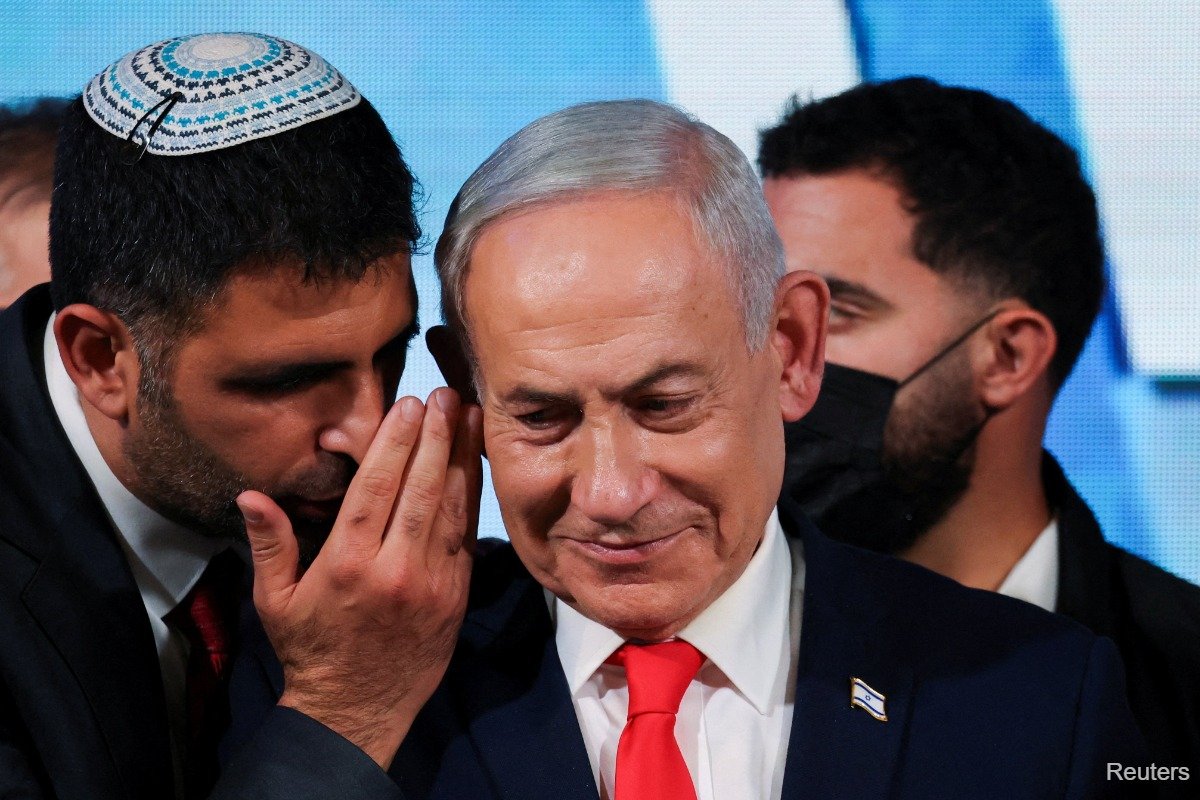
Israel’s recent parliamentary election on October 27, 2026, concluded without a clear winner, leaving the country’s political future uncertain. Prime Minister Benjamin Netanyahu’s right-wing bloc and the opposition alliance led by former military chief Gadi Eisenkot both fell short of the 61-seat majority required in the 120-seat Knesset, according to partial results and exit polls. This stalemate has triggered cautious reactions in financial markets, reflecting investor concerns over the prospect of prolonged political deadlock.
With approximately 86% of votes counted, Netanyahu’s bloc was projected to hold around 53 seats, while Eisenkot’s opposition was estimated at 48 seats. Arab parties, which achieved a record number of seats, were expected to secure about 19 mandates. Neither Jewish bloc commands a majority on its own, making coalition negotiations critical to forming a government. The official results are scheduled for certification by November 4, 2026, according to the Central Elections Committee.
Coalition-building in Israel is traditionally complex, and this election presents particular challenges. Eisenkot’s bloc has publicly ruled out formal cooperation with Arab parties, despite their potential kingmaker role, while Netanyahu’s coalition depends on ultra-Orthodox parties that do not identify as Zionist but provide essential support. This dynamic complicates efforts to establish a stable government. Should coalition talks fail, Israel may face another election early next year.
President Isaac Herzog, who oversees the government formation process, is not obliged to appoint the leader of the largest party. Instead, he will grant the mandate to the politician deemed most likely to form a viable coalition. Meanwhile, Netanyahu will remain prime minister in a caretaker capacity during the negotiations.
The election took place amid ongoing regional tensions and conflict, including Israel’s war in Gaza. Voter turnout was notably high at nearly 78%, the highest since 1999, signalling strong public engagement despite the country’s security challenges. The vote was widely interpreted as a referendum on Netanyahu’s leadership, influenced by the October 2023 Hamas attacks and their aftermath.
Financial markets responded cautiously to the inconclusive results. The Israeli shekel weakened by approximately 1.6% against the US dollar, reaching levels unseen in 16 months, with the Bank of Israel reporting the shekel at 3.1280 per dollar and 3.4801 per euro on October 28. The Tel Aviv Stock Exchange saw significant declines, with the main indexes dropping between 1.8% and 2.5%. Sectors such as banking, insurance, and real estate experienced notable losses, while technology stocks showed some resilience.
Long-term government bond yields rose to about 4.1%, reflecting falling bond prices as investors sought higher returns amid the heightened uncertainty. Analysts suggest that the election results introduce political risks that could dampen Israel’s economic momentum, which had remained strong due to a booming tech sector and increased defence spending. Some investors had anticipated that a change in government might ease regional tensions and improve relations with Western allies, but the current deadlock has tempered those expectations.
The election result underscores the fragmented nature of Israeli politics and the difficulties of coalition governance. The Arab parties’ strengthened presence in the Knesset marks a significant shift, potentially reshaping political dynamics, although both major Jewish blocs have so far emphasised maintaining a Jewish or Zionist majority. As coalition talks unfold over the coming weeks, the country faces a critical period in navigating its political and security challenges.