

Volkswagen Considers Using Chinese-Developed Software Platform for Future European Electric Vehicles

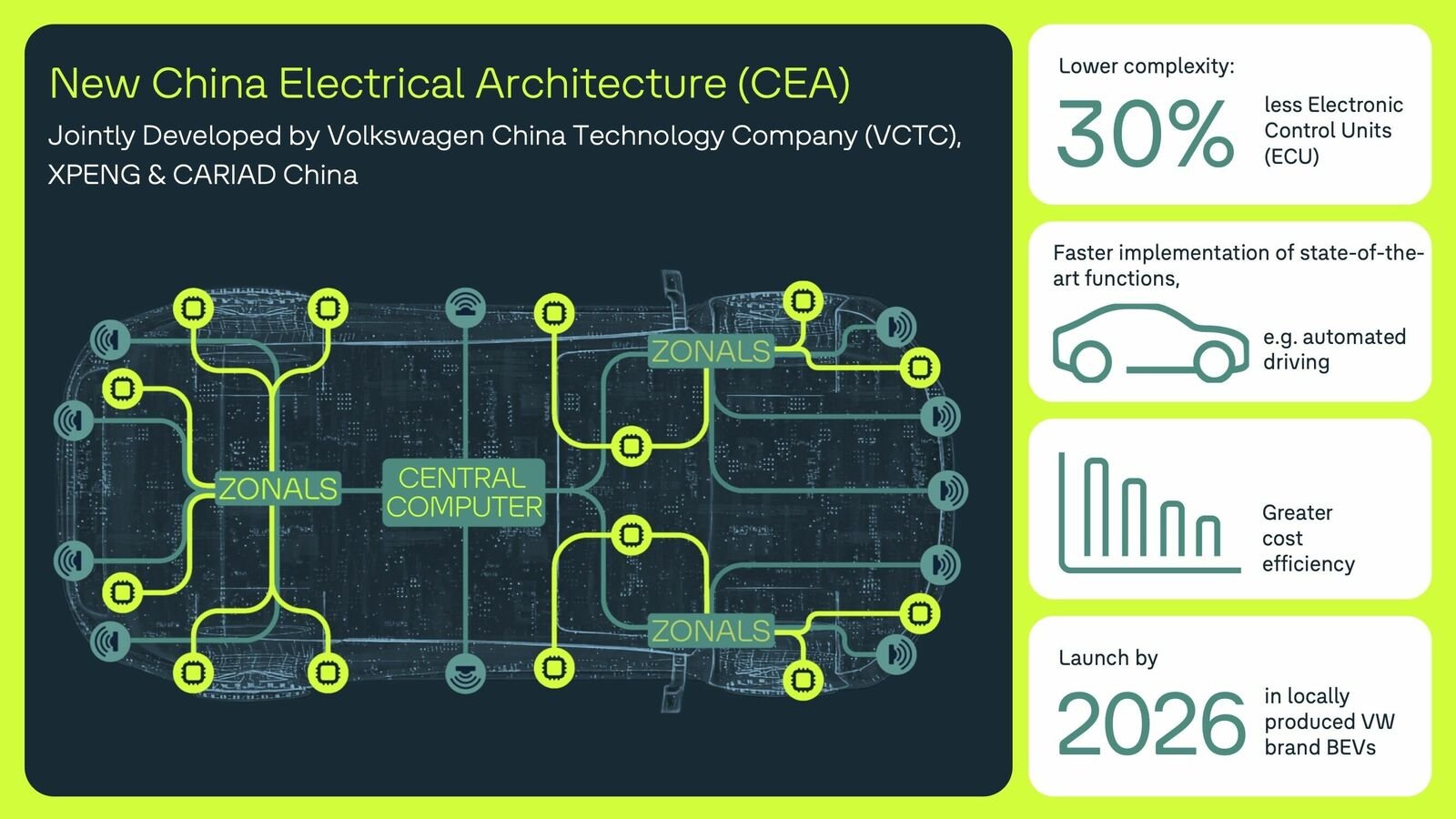
Volkswagen is reportedly exploring the possibility of adopting a software platform it developed in China, known as the China Electronic Architecture (CEA), for some of its future electric vehicles in Europe. The CEA was created in collaboration with Chinese electric vehicle manufacturer XPENG and is currently implemented in Volkswagen’s electric models produced for the Chinese market.
The software architecture aims to streamline the electronic systems within vehicles by reducing the number of electronic control units by up to 30%, which simplifies complexity and supports over-the-air (OTA) updates. This capability allows vehicles to receive new features and software fixes remotely without requiring visits to service centres, enhancing user experience and vehicle longevity.
According to reports citing unnamed sources, Volkswagen may extend the use of this architecture to European models under the Volkswagen, Skoda, and Cupra brands. If confirmed, about three-quarters of the next generation of these brands’ vehicles could be built on this platform. However, Volkswagen has declined to comment on these reports, leaving the plans unconfirmed.
The China Electronic Architecture was officially announced in April 2024 by Volkswagen and XPENG. It represents a zonal electrical/electronic (E/E) architecture specifically designed for China’s market needs, with series production expected to begin in 2026 on Volkswagen’s China-made electric vehicles. The collaboration combines XPENG’s expertise in vehicle platforms and software with Volkswagen’s local development capabilities through its China Technology Company and software unit CARIAD China.
XPENG’s official communications note that the two companies have been working closely since 2023, sharing development roles and engineering resources. Their first jointly developed model, the ID.UNYX 08, entered series production in Hefei, China, in March 2026. However, Volkswagen’s broader China strategy, including this model, has faced challenges, with early sales reportedly weaker than expected.
In parallel to its cooperation with XPENG, Volkswagen is also engaged in a significant joint venture with US electric vehicle manufacturer Rivian. Announced in November 2024, this partnership involves a planned investment of up to $5.8 billion to develop next-generation electrical architectures and software for future electric vehicles worldwide. Volkswagen expects to launch models based on this technology as early as 2027. The joint venture aims to leverage Rivian’s advanced software and hardware with Volkswagen’s global scale and engineering expertise.
It remains unclear how Volkswagen’s potential adoption of the China-developed software platform for European vehicles might impact its partnership with Rivian. No changes to the Rivian collaboration have been publicly announced, and Volkswagen continues to describe the Rivian joint venture as central to its global software strategy.
Volkswagen’s software subsidiary, Cariad, has been undergoing restructuring to improve competitiveness and reduce costs. This process includes significant job cuts and a strategic shift toward increased reliance on external partners such as XPENG and Rivian for software development. The company is aiming to become a more agile and cost-effective technology organisation while accelerating innovation.
If Volkswagen proceeds with using the China Electronic Architecture in Europe, it could mark a notable shift in how the company designs and builds its electric vehicles, potentially accelerating development timelines and reducing production costs. For now, the proposal remains a report, and further official details or confirmations from Volkswagen are awaited.