

Bolstering emergency care through tech, public-private partnerships

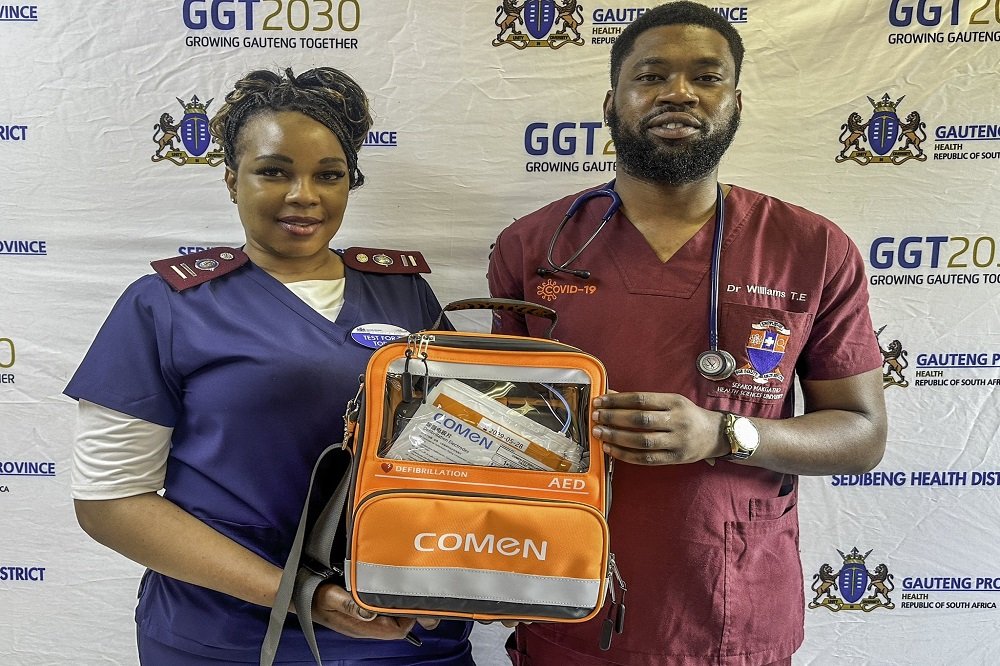
Bolstering emergency care through tech, public-private partnerships. Skip to content Menu Home | Bolstering emergency care through tech, public-private partnerships Healthcare workers at Sharpville Community Health Centre hold the Automated External Defibrillator (AED) in September 2026.
What happened
It also demonstrates the importance of public-private partnerships in strengthening the public healthcare system. They demonstrate how the combination of technology, preparedness and meaningful partnerships can strengthen emergency care and bring essential support closer to communities. Government has a responsibility to provide healthcare services, but collaboration with private-sector partners can help expand access to essential equipment, technical support and innovation. Six AEDs have been donated to healthcare facilities in Gauteng to improve emergency readiness. It is an investment in emergency readiness, improved healthcare access and the potential to save lives.
Heart disease and stroke remain serious public health concerns, and our efforts must focus on prevention, early detection and timely access to medical care. However, public awareness must be supported by a healthcare system that is adequately prepared to respond.
The wider picture
This is where modernising healthcare, investing in technology and strengthening facility readiness become important. The Department is continuing to embrace technology as we modernise healthcare services. Modern healthcare is not only about buildings and infrastructure; it is also about ensuring that our healthcare workers have access to appropriate technologies and equipment that can support timely and effective care. It is a contribution towards strengthening our ability to respond to emergencies and protect the lives of people who depend on our public healthcare facilities.
Such partnerships must remain focused on improving the experience of patients and supporting healthcare workers. Their true value is reflected in the impact they have on communities and in their contribution to strengthening the quality and responsiveness of public healthcare services. As government, we must continue investing in healthcare infrastructure, digital transformation, emergency medical services and modern equipment. At the same time, we must ensure that healthcare workers are supported to use available technology appropriately and that equipment remains functional and ready for emergencies.
What has been reported
Photograph: Carlos Barría/ReutersAlbanese government considers ‘world-leading’ ban on smart glasses in public offices and buildings Minister for public service says the devices pose ‘legitimate privacy and security concerns’ in commonwealth-run workplaces Follow our Australia news live blog for latest updates Get our new political email, free app or daily news podcast The Albanese government is considering a “world-leading” ban on smart glasses in its offices and service centres as councils around Australia push the technology out of public spaces over privacy fears.
Canterbury-Bankstown’s mayor, Bilal El-Hayek, decried what he called “pervert glasses” as the council barred the wearable tech from public pools. Pending restrictions on smart glasses would be the federal government’s latest workplace technology reform after it issued guidance on the use of AI in the public service last week. Last week, another AI company employee publicly resigned, warning the technology “could kill us all by the end of the decade”. The Technological Republic – Alex Karp and Nicholas ZamiskaThis manifesto by the CEO of Palantir was described by one Guardian colleague as one of the worst-written books he had ever read.
To the public, the idea that the technology could perform many of the tasks it can today, much less become super intelligent and take over the world, felt largely hypothetical, if not entirely a thing of science fiction. This is why the donation of six Automated External Defibrillators (AEDs) by Shenzhen Comen Medical Instruments company to healthcare facilities in Gauteng is more than the provision of medical equipment. These machines are portable, lightweight, easy to carry around a healthcare facility and they are powered by a battery that can last for two years without charging and will only be replaced after the two-year lifespan, a function that will be very useful during a power outage.
What happens next
This means that the equipment can be brought closer to a patient who is unresponsive and requires emergency resuscitation, rather than waiting for the patient to be moved to a location where the equipment is available. The devices provide voice prompts to guide healthcare professionals through the connection process. Stroke is also a medical emergency that requires immediate attention. Communities must be able to recognise warning signs and seek emergency assistance without delay. The donation of these six AEDs is a practical example of how technology can support this objective.
By placing portable equipment closer to patients, healthcare professionals can respond more effectively to emergencies within the facilities. We are therefore grateful to Shenzhen Comen Medical Instruments for choosing to contribute to healthcare in our province.
The report has been compiled by The Daily Waves using information reported across sabcnews.com, theverge.com, theguardian.com. Details are presented according to the information available at the time of publication and may change as authorities, organisers or other relevant parties provide updates.