

Google to Launch AI Satellite Prototype into Space Next Week

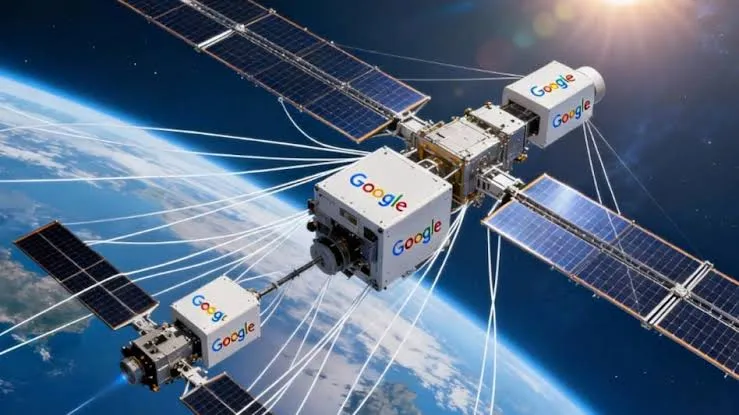
Google is preparing to send a small satellite into space next week as part of a test to see how its artificial intelligence (AI) hardware performs in orbit. This marks the first step in Google’s Project Suncatcher, which aims to explore whether AI computing can be done from space rather than on Earth.
The satellite will carry special AI chips called Tensor Processing Units (TPUs). These chips will face tough conditions in low Earth orbit, including strong vibrations during launch, intense radiation from space, and extreme temperature changes. Google wants to find out if the chips can handle these challenges and keep working reliably.
In space, cooling electronics is difficult because there’s no air to carry heat away. To manage this, Google is testing a cooling system that uses heat pipes combined with radiators to cool the chips in the vacuum of space. Ground tests have shown promise, but only a real space test will confirm if the system works as planned.
The satellite will launch aboard a SpaceX mission scheduled soon, sharing the ride with other satellites. This mission is mainly about learning what works and what doesn’t in space, rather than running a full AI data centre in orbit.
Google’s long-term goal is to one day have multiple satellites working together, powered by nearly constant sunlight in space, to handle large AI workloads. Future plans include launching two satellites in 2027 that will communicate with each other using laser links — a step toward building a network of AI-powered satellites.
While the idea of AI data centres in space is still experimental and faces many technical challenges, this test will provide valuable information. It will help Google understand how to build AI systems that can survive and function in the harsh environment beyond Earth.