

Israeli Military Operation in Hebron Displaces Hundreds of Palestinian Families Amid Rising Tensions

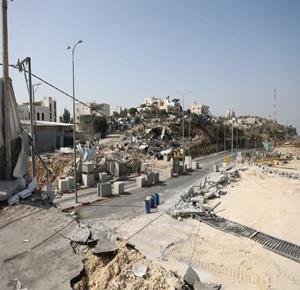
A large-scale Israeli military operation in the city of Hebron, located in the occupied West Bank, has resulted in the displacement of hundreds of Palestinian families and the demolition of homes and businesses. The operation was launched following a deadly attack on Israeli soldiers near the city on 23 October 2026, when two Palestinian gunmen opened fire at an Israeli military checkpoint, killing two soldiers and wounding three others. The two attackers were also killed during the incident.
In the immediate aftermath of the shooting, Israeli forces imposed strict restrictions on movement in Hebron, sealing off key roads and entrances and tightening control over the city’s approximately 200,000 residents. Military bulldozers demolished buildings in several neighbourhoods, including Ein Deir Baha, al-Jaladah, and Farsh al-Hawa, leaving many families homeless.
Palestinian officials report that at least 200 families, equating to over 1,000 people, have been displaced so far, with some sources indicating the figure could be around 1,200 to 1,500 people. There are also warnings that another 2,500 individuals might be forced to leave their homes as the operation continues. Many families were ordered to evacuate quickly, sometimes overnight, and were permitted to take only a limited number of personal belongings. Some were instructed to leave without their vehicles.
Hebron’s mayor, Youssef al-Jaabari, expressed concern that the operation was politically motivated, noting that Israeli Prime Minister Benjamin Netanyahu visited the city shortly after the attack. During his visit on 23 October, Netanyahu announced plans to evacuate residents, conduct house-to-house searches, remove weapons, and destroy what he described as terrorist infrastructure. The Prime Minister’s Office confirmed his remarks, and Netanyahu also indicated that Israel was considering a broader military campaign across the West Bank on a scale not seen since 1967.
This military escalation comes just days before Israel’s general election scheduled for 27 October 2026. Netanyahu, who has campaigned on a platform emphasizing security, cancelled his party’s campaign events to visit Hebron, wearing protective gear and posting a video from the scene. His visit and statements have led Palestinian officials and some residents to accuse the Israeli government of using the operation to bolster electoral support, especially among far-right constituencies and settlers.
In addition to demolitions and evacuations, Israeli forces have arrested at least 13 Palestinians during raids and searches in Hebron and surrounding areas. Access to villages and refugee camps near Hebron has been blocked or heavily restricted, further constraining the movement of Palestinians in the region.
The Palestinian Authority has condemned the operation as collective punishment and has called for urgent international intervention to halt further displacement and violations. The UN Secretary-General António Guterres expressed alarm at the escalating violence and sweeping closures imposed by Israel in the West Bank following the Hebron attack.
The Israeli military has stated that its operations will continue for several days, targeting militants and weapons caches. However, the full scope and duration of the operation remain unclear as the situation develops. Many displaced families are currently without shelter and face an uncertain future amid heightened tensions and political uncertainty in the region.