

Robert Kiyosaki Warns of Historic Market Bubble, Strategies Investors Are Using to Protect Retirement Wealth

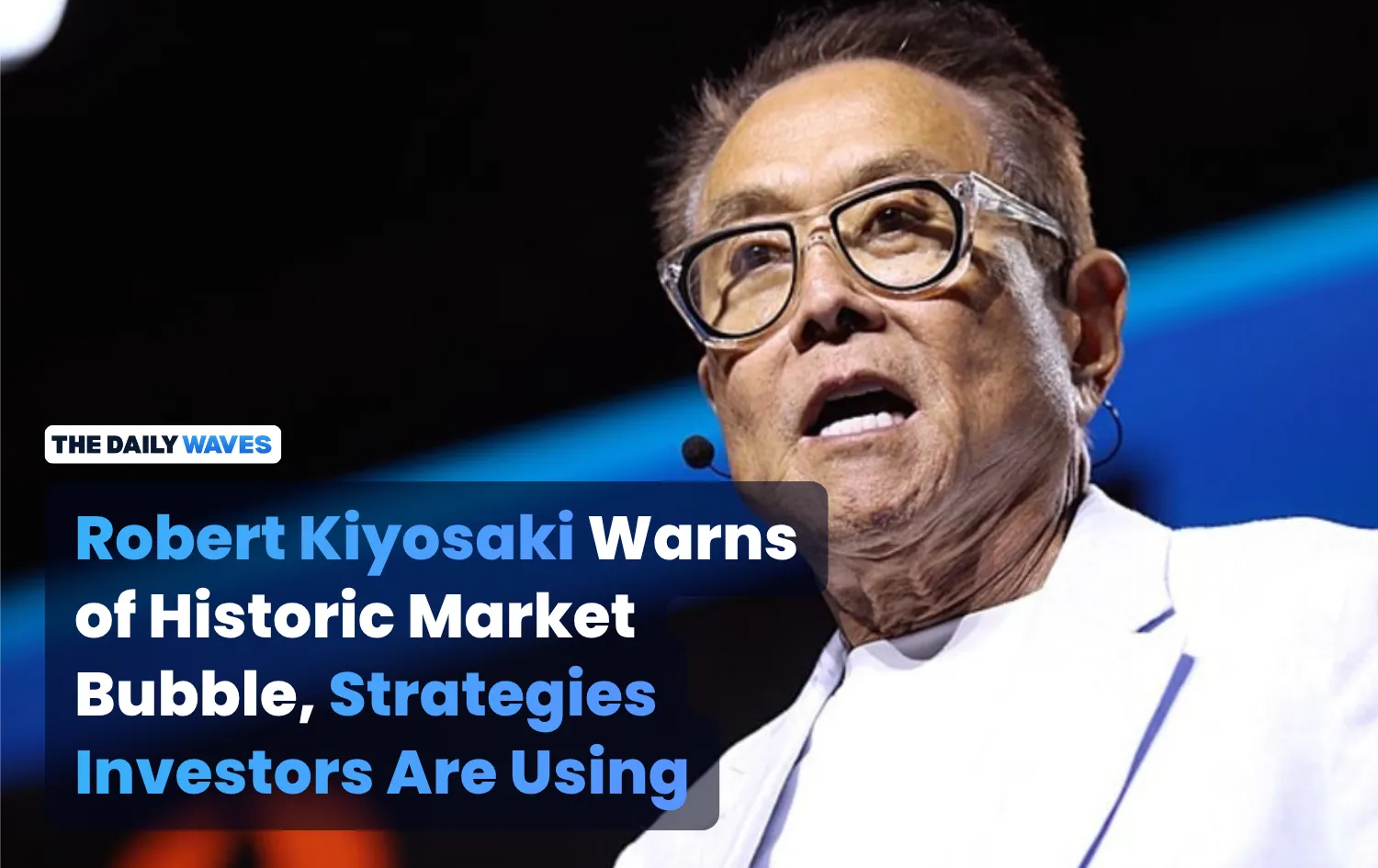
Fears of a major market correction are resurfacing, driven by one of the most outspoken voices in personal finance. Robert Kiyosaki is once again cautioning that a massive financial bubble could burst, putting retirement savings—especially those tied heavily to equities—at serious risk.
In a recent social media post, Kiyosaki claimed the current financial system is sitting on what he described as the largest bubble ever recorded. His warning centers on baby boomers, many of whom rely on retirement accounts heavily exposed to stock market performance.
Kiyosaki argues that modern retirement structures lack the security older pension systems once provided. Defined contribution plans, such as 401(k)s, shift risk onto individuals. Market downturns, inflation, and currency erosion can all directly impact savings, leaving retirees vulnerable at a critical stage of life.
His concern isn’t entirely without context. Over the past two years, the S&P 500 has surged nearly 40%, extending a strong bull run. History shows that prolonged rallies often precede corrections, though timing remains unpredictable.
While Kiyosaki’s past forecasts have missed the mark at times, the broader principle of market cycles remains widely accepted. Periods of expansion are typically followed by contraction. For investors, the focus shifts less toward predicting crashes and more toward managing risk.
One widely used approach involves diversifying beyond traditional equities. Kiyosaki highlights alternative assets that have historically acted as hedges during periods of volatility.
Gold remains a cornerstone in that strategy. Unlike fiat currencies, which can be expanded through monetary policy, gold carries intrinsic scarcity. This characteristic has made it a long-standing store of value during economic uncertainty. Prices have climbed sharply in recent years, hitting record highs and reinforcing its appeal among investors seeking stability.
Still, entering the gold market requires careful planning. Physical ownership involves storage and insurance costs, while indirect exposure through financial instruments introduces different layers of risk. Investors need to weigh these factors before committing capital.
Kiyosaki also points toward digital assets, particularly Bitcoin. He maintains an optimistic outlook, projecting significant long-term growth despite recent volatility. Bitcoin has delivered strong gains over extended periods, though price swings can be severe, making it a higher-risk component in any portfolio.
For individuals nearing retirement, that volatility demands caution. Allocating a small portion of capital into crypto may offer upside potential, but overexposure can amplify losses during downturns.
Beyond asset selection, professional guidance plays a critical role in navigating uncertain markets. Financial advisors can help investors assess time horizons, risk tolerance, and portfolio structure—key variables that influence long-term outcomes.
Research following the global financial crisis indicates that individuals who maintained advisory relationships were better positioned to preserve wealth compared to those who managed investments alone. Strategic planning, rather than reactive decision-making, often proves decisive during turbulent periods.
Kiyosaki’s message reflects a broader concern circulating among economists and market participants: elevated valuations, rising debt levels, and persistent inflation pressures create conditions that warrant caution. While no one can pinpoint the exact moment a downturn will arrive, preparing for volatility remains a practical step.
For investors, the objective isn’t predicting the next crash. It’s building resilience—ensuring portfolios can withstand shocks while continuing to grow over time.