

Elon Musk Sounds Alarm on U.S. Debt Crisis, Warns AI May Be the Only Way Out

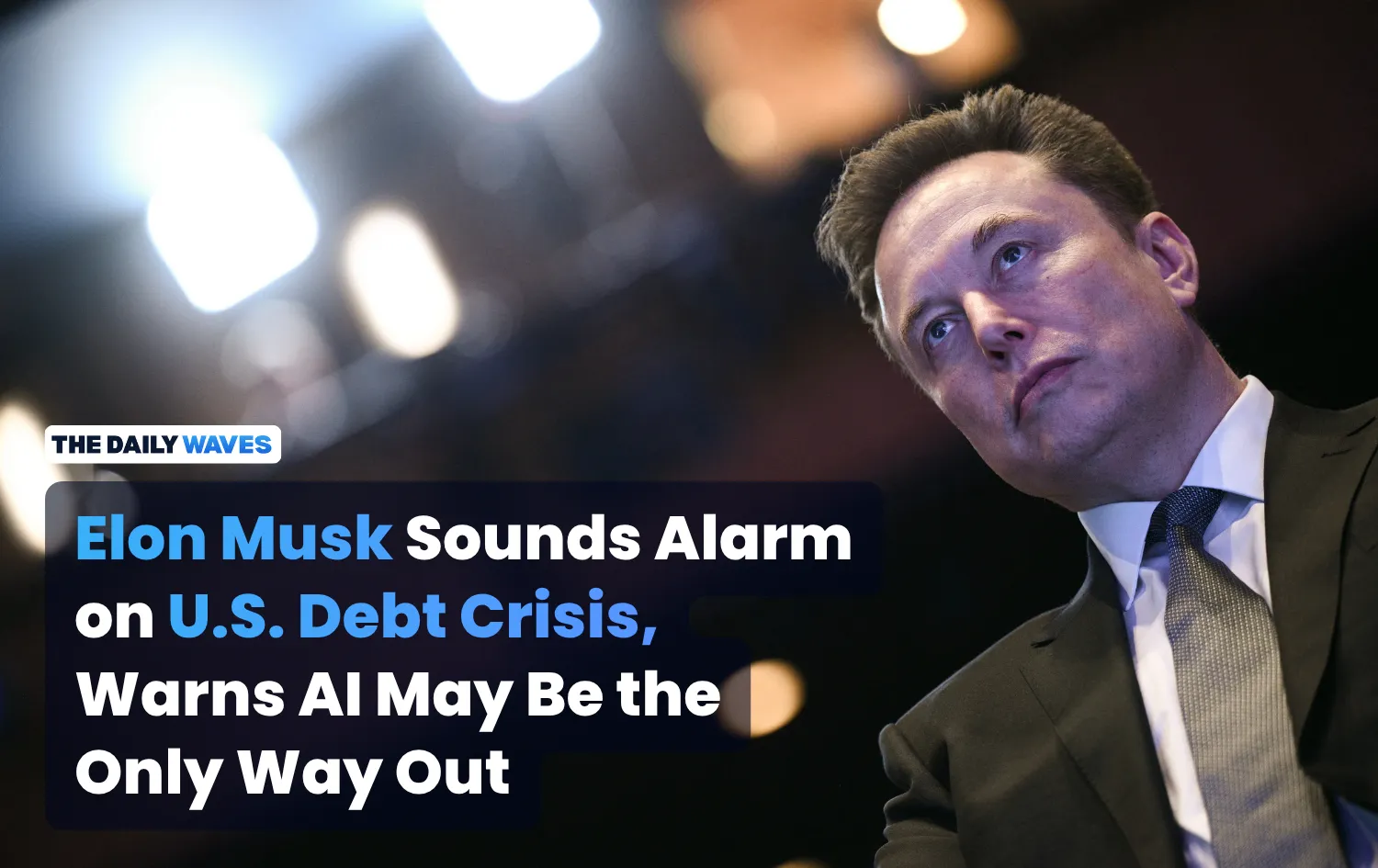
A stark warning on America’s financial trajectory is grabbing attention across economic circles. Billionaire entrepreneur Elon Musk has raised concerns that the nation’s swelling debt could push the economy toward collapse, unless a dramatic shift in productivity takes hold.
Speaking during a February appearance on the Dwarkesh Podcast, Musk delivered a blunt assessment. He argued that without rapid advancements in artificial intelligence and robotics, the United States faces an unavoidable fiscal breakdown. In his view, no traditional policy fix comes close in scale.
Government figures reinforce the scale of the issue. U.S. national debt has climbed close to $39 trillion, driven by persistent gaps between spending and revenue. In fiscal 2026 alone, the deficit has already surpassed $1 trillion, underscoring a widening imbalance that shows little sign of slowing.
Musk also highlighted a less visible but equally serious strain: interest payments. Servicing the debt now costs more than the country’s military budget, exceeding $1 trillion annually. That burden continues to grow as borrowing accelerates.
Geopolitical tensions are adding further pressure. Military spending linked to the ongoing Iran conflict has already run into the billions within days of escalation. Estimates suggest total costs could eventually exceed $1 trillion, with long-term interest obligations pushing that figure even higher. These expenses, analysts warn, will weigh heavily on future generations.
Policy decisions in Washington could intensify the situation. A proposed defense budget under Donald Trump calls for $1.5 trillion in spending, marking one of the sharpest increases in decades. Projections indicate this plan could add trillions more to national debt over the next decade once financing costs are included.
Legislative measures are also under scrutiny. The One Big Beautiful Bill Act is expected to increase debt by more than $4 trillion over the coming years, further complicating an already fragile fiscal outlook.
Musk’s concerns are echoed by other financial heavyweights. Hedge fund veteran Ray Dalio has described the situation as a “debt death spiral,” where borrowing becomes necessary just to cover interest payments. Still, Dalio stops short of predicting outright default. He believes central banks would intervene, effectively printing money to manage obligations.
That approach, however, carries its own risks. Expanding the money supply can erode purchasing power, gradually weakening the value of the dollar. Historical data already shows a steep decline in buying power over decades, highlighting a long-term trend that concerns economists.
Despite the bleak outlook, opportunities remain for investors who plan carefully. Periods of fiscal instability have historically pushed capital toward assets that preserve value, offering a degree of protection against currency erosion.
Musk’s message is clear: without a significant leap in productivity driven by advanced technology, the current path is unsustainable. The debate now centers on how quickly innovation can scale—and if it can outpace the nation’s mounting financial obligations.