

Apple’s M6 Mac Mini Delivers Power Boost Amid Rising Price Concerns

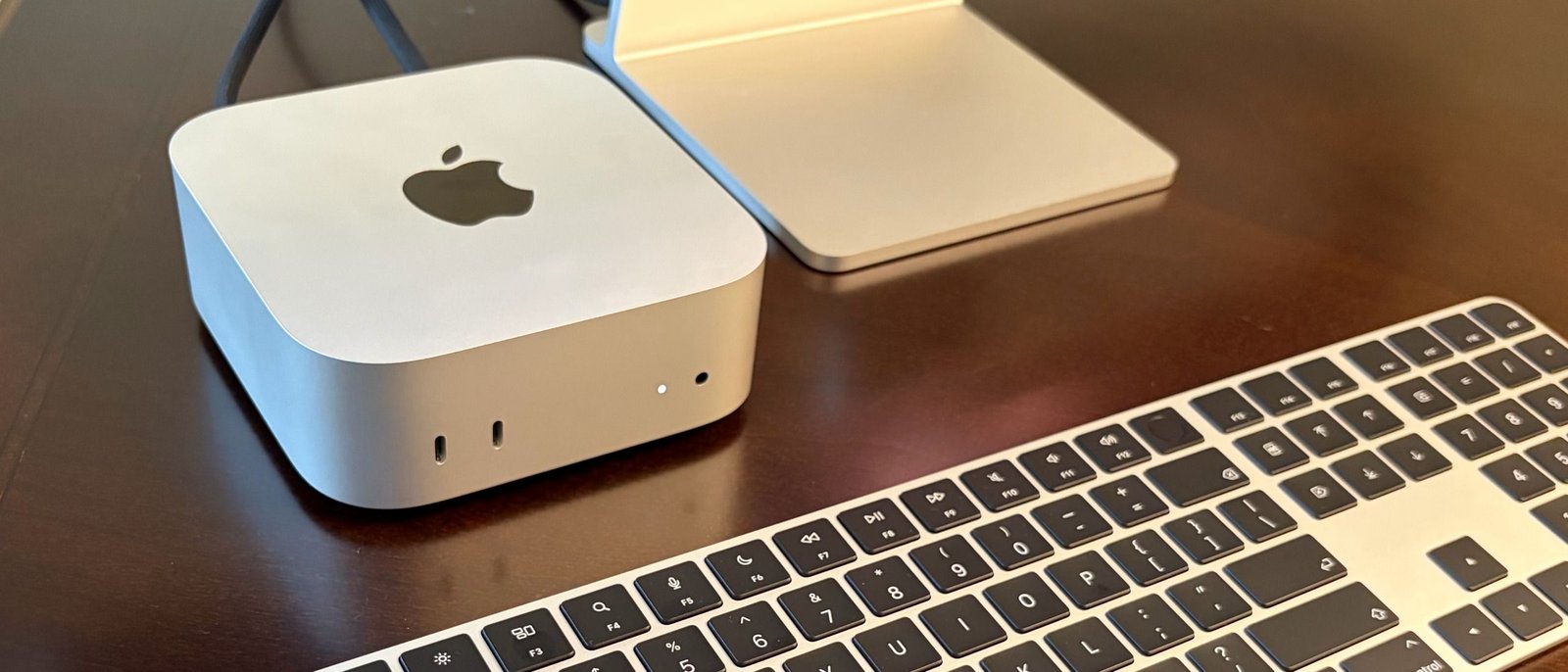
The latest Mac Mini update brings significant AI and performance gains but at a notably higher starting price, sparking debate over value.
Apple has unveiled its newest Mac Mini, powered by the all-new M6 chip, marking a substantial upgrade in performance and AI capabilities. Announced on 25 August 2026 and released on 22 September, the M6 Mac Mini retains the compact 5-by-5-inch design introduced in 2024 but introduces a host of internal enhancements that position it as a versatile desktop for both general productivity and emerging AI workflows.
SANDF Welcomes Over 2,500 New Recruits Following Historic Joint Basic Training Intake
Design and Connectivity Remain Familiar
The 2026 Mac Mini continues with the minimalist, compact chassis that Apple redesigned two years prior. Measuring just 5 inches square and standing 2 inches tall, the device fits unobtrusively on any desk. While the external design is largely unchanged, the port selection supports modern connectivity standards: two front USB-C ports (10 Gbps), a 3.5mm headphone jack, and on the rear, three Thunderbolt 4 ports, an HDMI 2.1 port, and a 2.5 Gigabit Ethernet port standard (with an optional 10 Gigabit upgrade).
Wireless connectivity has been upgraded to Wi-Fi 7 and Bluetooth 6, improving speeds and reliability over the previous generation’s Wi-Fi 6E and Bluetooth 5.3. However, the Mac Mini still lacks legacy USB-A ports and an SD card slot, which some users may find inconvenient.
Powerful New M6 Chip Focused on AI and Performance
The heart of the new Mac Mini is Apple’s M6 chip, featuring a 12-core CPU (comprising 2 super cores, 4 performance cores, and 6 efficiency cores) and a 12-core GPU. This represents an increase over the previous M4 and M5 chips, which had 10 CPU and GPU cores. The M6 also introduces a dual 16-core Neural Engine, doubling the AI processing units compared to earlier models, and supports up to 170GB/s of memory bandwidth on configurations with 24GB or 32GB of unified memory.
Apple claims the M6 Mac Mini delivers up to 40% faster CPU performance, up to 2x faster graphics and storage speeds, and up to 4x faster AI performance compared to the M4 Mac Mini. Independent benchmarks confirm significant gains: single-core CPU performance is approximately 20-24% faster than the M4, multi-core performance improves by around 36-48%, and GPU performance sees up to 71% improvement in some tests.
Performance in Real-World Use
Reviewers from WIRED, 9to5Mac, Tom’s Hardware, and Ars Technica have tested the M6 Mac Mini across various workloads. WIRED’s tests showed the device generating a 20-step image locally with a 9-billion-parameter AI model in about 1 minute and 40 seconds, demonstrating notable AI inferencing capabilities. However, the base 16GB memory configuration limited the ability to run larger AI models or complex agentic workflows, with some tasks failing to complete due to insufficient RAM.
In gaming, the M6 Mac Mini achieved 53 frames per second in Cyberpunk 2077 at 1080p, increasing to 82 fps with light upscaling, placing it competitively against some high-end laptops. Graphics performance was about 15% slower than the M4 Pro MacBook Pro in certain benchmarks but still impressive for a compact desktop.
Storage performance also improved markedly, with sequential read and write speeds roughly doubling compared to the M4 Mac Mini, reaching around 6,000 MB/s in Blackmagic Disk Speed Tests.
Pricing and Value Debate
The M6 Mac Mini starts at $899 in the United States for the base configuration with 16GB of unified memory and 256GB of SSD storage. This represents a $300 increase over the original $599 launch price of the 2024 M4 Mac Mini with similar specs, a rise reviewers attribute largely to increased component costs driven by AI hardware demand.
While Apple offers upgrades up to 32GB of memory and 2TB of storage, these come at a premium, with the 512GB storage option alone adding $200 to the base price. Reviewers from Ars Technica have criticised this pricing as a significant erosion of the Mac Mini’s historic value proposition, whereas WIRED, 9to5Mac, and Tom’s Guide acknowledge the higher cost but still regard the M6 Mac Mini as a compelling and versatile compact desktop option.
Conclusion: A Strong Performer with a Higher Price Tag
The 2026 M6 Mac Mini is a powerful update that brings Apple’s smallest desktop into the AI era with enhanced CPU, GPU, and Neural Engine capabilities. It offers strong performance for productivity, creative work, gaming, and local AI tasks within a compact and well-designed chassis.
However, the significant price increase and limited base storage and memory configurations temper its appeal for budget-conscious buyers. Users requiring extensive AI model workloads may need to consider higher memory options or the more powerful M5 Pro Mac Mini variant.
Overall, the M6 Mac Mini remains a versatile and capable machine, well-suited for users seeking a compact desktop with modern connectivity and AI acceleration, albeit at a higher cost than previous generations.