

OPINION: Protecting the institution that safeguards our democracy

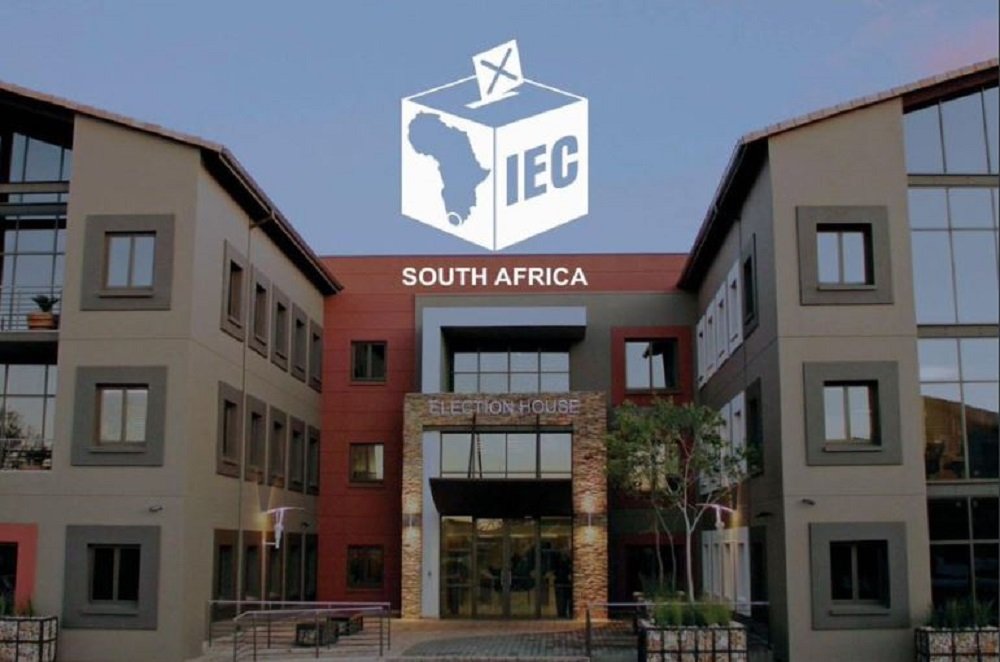
OPINION: Protecting the institution that safeguards our democracy. Skip to content Menu Home | OPINION: Protecting the institution that safeguards our democracy Election House Image Credits : IEC SABC News 18 September 2026, 09:01 [SAST] by Michael Currin One of the endearing symbols of our democracy is the Electoral Commission of South Africa (IEC), which has overseen several elections since 1994.
What happened
In a democracy, institutions must expect to be questioned, challenged and held to account, and this has indeed been the case with all our elections since 1994. As South Africa prepares for another local government election in November, the credibility of the institutions that underpin our democracy matters more than ever. The work of the IEC in safeguarding the integrity of the electoral process is central to democracy The work of the IEC in safeguarding the integrity of the electoral process is central to our democracy and therefore it comes as no surprise that this work faces intense public and political scrutiny, along with robust debate.
Across South Africa, democratic institutions are operating in an environment shaped by political contestation, misinformation and disinformation, and a rapidly changing information landscape. For the IEC, these pressures carry particular weight because confidence in the electoral process is inseparable from confidence in the institution entrusted with administering it. Public accountability is an essential feature of a healthy democracy and the work of the IEC leading up to the Local Government Elections on 04 November 2026 and thereafter will be severely scrutinised.
The wider picture
The IEC as an independent body established to promote and safeguard our democracy has a good reputation and a positive track record of conducting elections. Its independence and impartiality are safeguards for citizens and for the democratic process through which they exercise their political power. This is particularly relevant in an age of misinformation and disinformation, which places a burden on all of us to safeguard the institutions through which our democratic rights are exercised.
We should question them, challenge them and require of them that they uphold the highest standards, but we should also recognise the consequences when legitimate institutions are weakened or their independence is eroded through unjustified attacks on their credibility. Let us therefore come out in our millions as we have done since 1994 and make our mark for democracy, and in doing so ensure a better tomorrow for all. The IEC has always welcomed scrutiny of its work, and the Electoral Act allows for accredited neutral observers to monitor the elections.
Applications for organisations seeking accreditation as election observers for South Africa’s upcoming local government elections are open through the IEC Observer Accreditation Portal https://online. elections. org. za/orsonline/Welcome The IEC at the close of the statutory period for the submission of candidate nominations for the 2026 Local Government Elections at 17h00 on Friday, 28 August 2026, announced that a total of 142 072 candidates had been nominated to contest 10 526 councils’ seats across municipalities. At first glance this might seem like a daunting figure however, South Africa has a proud history of respect for the Constitution and holding of free and fair Elections since 1994.
What has been reported
During the Local Government Elections on 04 November 2026 thousands of vetted and trained officials such as presiding officers, counting officers, volunteers and monitors will be deployed at voting stations on election day. Furthermore, the Electoral Act allows for political parties contesting the elections to have representatives at voting stations to ensure compliance with voting procedures and to monitor the counting process. The IEC has a constitutional and legislative mandate to administer elections in a manner that protects the integrity of the electoral process and enables citizens to exercise their democratic right to choose their representatives.
Since its establishment the IEC has administered successive national, provincial and local government elections, enabling millions of South Africans to exercise their right to vote and facilitating the peaceful transfer of political power through the ballot. Over the past 32 years, it has helped establish elections as a regular and credible mechanism through which South Africans express their political choices. The IEC must continue to earn confidence by consistently fulfilling its constitutional and legislative mandate, while remaining open to scrutiny and accountable to the people it serves.
Given that free and fair elections depend on procedural correctness and on credible information that is key to shaping the voters’ choices, the IEC has promulgated the Electoral Code of Conduct Countering Disinformation in the Local Government Elections. The IEC has stated that this code of conduct is intended to enhance election integrity, promote free, fair and orderly local government elections ahead of the 4 November 2026 Local Government Elections.
What happens next
Under the code of conduct, political parties and candidates must: Check information for accuracy before sharing it, and take responsibility for content published by them, for them, or on their behalf. Publicly retract and correct any false or misleading information within 36 hours of becoming aware of it, and censure those responsible where appropriate. It further guards against deceptive practices – including fake accounts, bot networks, coordinated inauthentic behaviour, doxing and cyberbullying. It also states that AI-generated (“synthetic”) content must be clearly labelled before distribution.
The same applies to political advertising which must be clearly labelled so that the public can identify who is behind it. In accordance with the code of conduct, instances of online disinformation should be reported to Real411 within 36 hours of becoming aware of them. It also specifically prohibits disinformation targeting the Electoral Commission, or its staff, requiring parties and candidates to correct it publicly where it occurs.