

Trump Defends Iran Blockade as Oil Prices Surge and Tensions Deepen

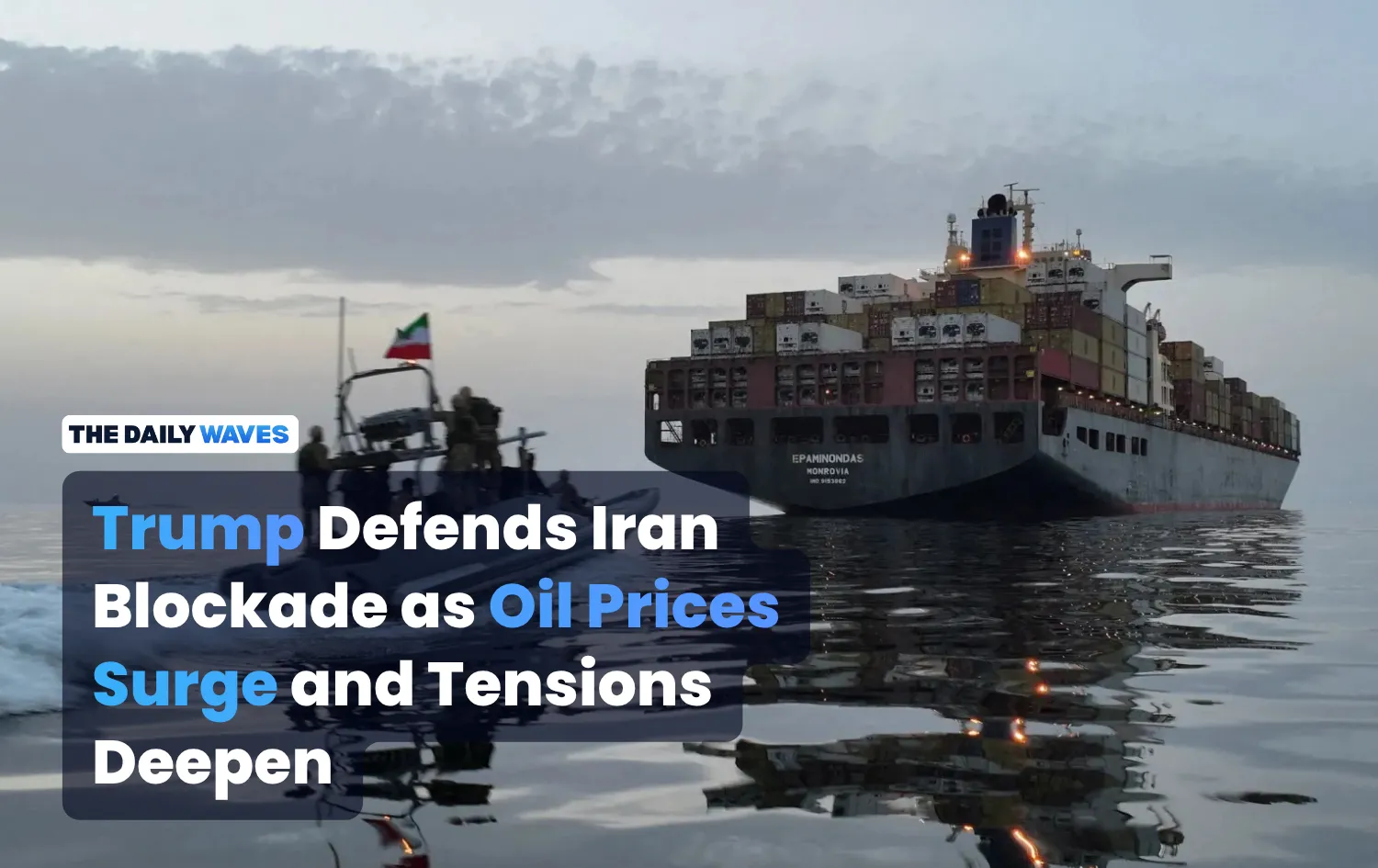
Global markets are bracing for prolonged instability as the standoff between Washington and Tehran intensifies, driving oil prices higher and raising fresh economic concerns.
US President Donald Trump has firmly backed the ongoing naval blockade targeting Iran, describing its impact as severe on the country’s economy. Speaking at the White House, he indicated no immediate plans to ease pressure, signaling that the confrontation could stretch further.
At the center of the crisis lies the Strait of Hormuz, one of the world’s most critical energy corridors. The waterway has effectively been shut, disrupting global oil flows and triggering sharp price swings across energy markets.
Brent crude surged to as high as $126 per barrel during recent trading before settling lower, though still elevated. Prices remain volatile as traders weigh the risk of extended conflict and the possibility of renewed military action.
The impact is already being felt by consumers. Fuel prices have climbed rapidly, with some regions in the United States seeing gasoline costs rise above $6 per gallon. The surge in energy costs is emerging as a political challenge, particularly with elections on the horizon.
Trump expressed confidence that prices would eventually fall once the conflict ends, though markets remain skeptical given the current trajectory.
Behind the scenes, military planning appears to be advancing. Senior US officials, including leadership within Central Command, have reportedly outlined potential strike options aimed at breaking the deadlock. Analysts suggest the situation may reach a critical point in the coming weeks if diplomacy continues to stall.
On the other side, Iran’s newly appointed leader Mojtaba Khamenei has taken a firm stance, pledging to defend the country’s nuclear and missile capabilities. His remarks signal a hardening position, reducing the likelihood of a near-term agreement.
Iranian President Masoud Pezeshkian has also condemned the blockade, framing it as an extension of military aggression and warning it cannot be tolerated.
Tehran has made its position clear: the strait will remain closed unless the blockade is lifted. That creates a high-stakes standoff with global consequences, as energy markets remain tightly linked to developments in the region.
For now, the outlook remains uncertain. Oil prices are expected to stay elevated as long as the disruption continues, feeding into inflation concerns and adding pressure on economies worldwide.
The coming weeks could prove decisive. With tensions rising and both sides holding firm, the risk of escalation is no longer theoretical — it is increasingly part of the market’s baseline expectation.